
.png)
What a data center test-fit answers
A test-fit is a feasibility layout done before design starts. It checks whether a target capacity — a number of megawatts of IT load — can be built on a specific plot once everything the IT load depends on is included, not just the white space:
- Data halls sized for the rack count and density
- Electrical rooms and power trains — transformers, switchgear and UPS
- A generator yard with fuel storage and maintenance clearances
- A chiller yard, pumps and the hydronic loop
- Offices, support spaces, access roads and setbacks
Getting this wrong early is expensive. A plot bought, or a capacity promised, on a test-fit that underestimated the generator yard or the chiller plant usually ends in a redesign, a smaller campus or a second site.
Why spreadsheet test-fits drift
A test-fit is traditionally assembled from separate pieces: a load spreadsheet, rough equipment counts and blocks drawn in CAD. Each piece can be right on its own, but they are not connected. Change the IT load, the rack density or the redundancy target and the equipment counts, the room sizes and the drawing all need updating by hand — and the cost estimate is usually the last to catch up.
How a test-fit works in DCtoB
- Set the target. Enter the IT load, the data halls, rack density and redundancy — the baseline everything else derives from.
- Size the plant. DCtoB sizes the UPS, generators, chillers, pumps and cooling units from that load and redundancy target. How power and cooling sizing works.
- Trace the plot. Draw the real land boundary, then place the halls, power rooms, offices and the generator and chiller yards to scale, with their clearances. More on site layout.
- Check it in 2D and 3D. Review the whole site as a live 3D model, and the power and yard blocks as dimensioned 2D plans.
- Price it. The same model produces the bill of quantities and a complete technical proposal. From design to BoQ.
Because every step reads the same configuration, changing the IT load once updates the equipment, the layout and the cost together — so you can try a different capacity on the same plot and compare the answers.
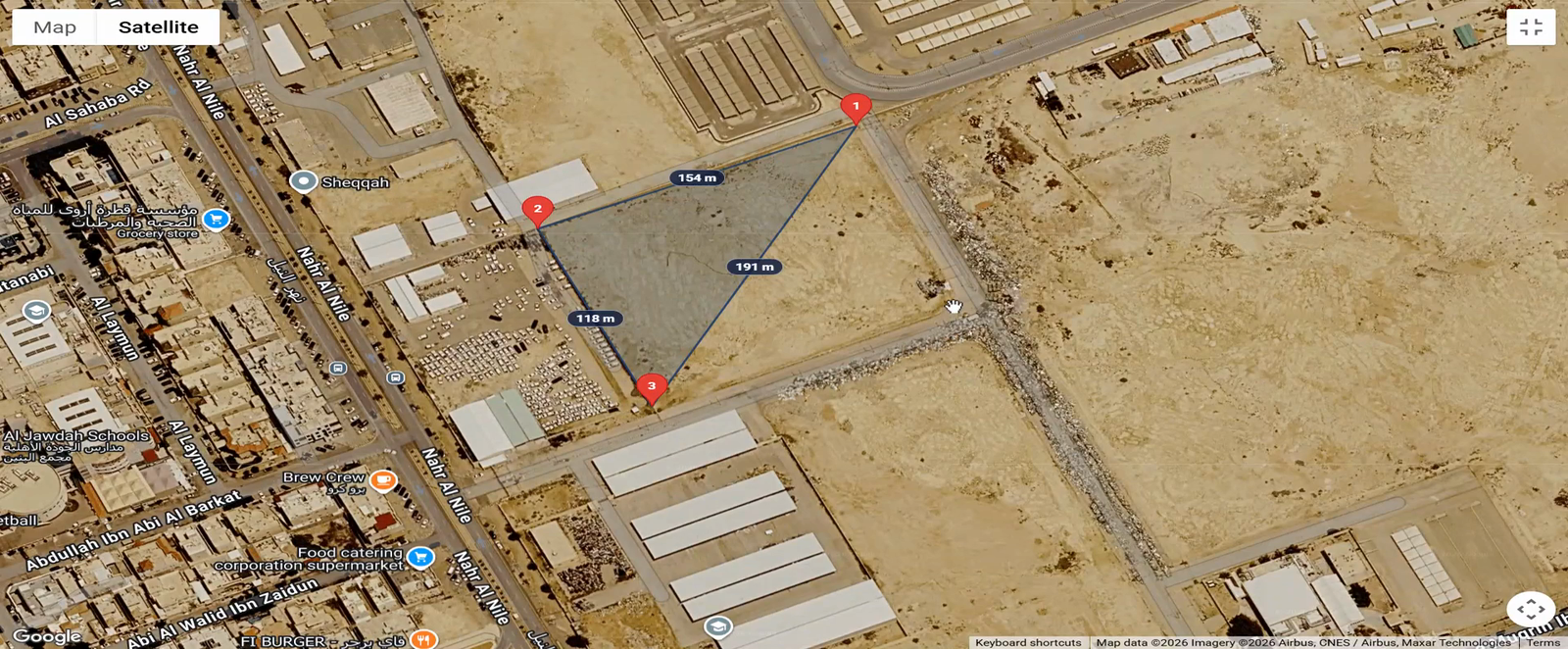
What to check in any data center test-fit
- Does the plant fit, not just the white space? Yards and electrical rooms can need as much area as the data halls themselves.
- Is the redundancy target in the layout? N+1 or 2N changes how many generators, UPS modules and chillers must physically fit. N, N+1 and 2N explained.
- Are clearances and access realistic? Generators and chillers need maintenance space, fuel access and roads.
- Is density planned per hall? High-density and AI halls change power and cooling far more than their floor area suggests. Designing for high density.
- Does the cost follow the design? A test-fit only supports a decision if the budget reflects the same equipment.